
Understanding Skin Pigmentation: Freckles, Lentigines, and Hormonal Melasma
A clear, even complexion is often associated with youthfulness and skin health. However, many individuals, particularly women in their fifties, experience various forms of facial pigmentation that can affect their confidence. To address pigmentation effectively, it is essential to understand that not all dark spots are the same. Different types of pigmentation, such as freckles, solar lentigines, and hormonal melasma, have distinct biological causes and reside at different depths within the skin. A cosmetic physician must accurately diagnose the specific type of pigmentation to design a safe and successful treatment plan.
The Biology of Skin Pigmentation
To understand the different types of pigmentation, it is helpful to look at how the skin produces colour. The cells responsible for skin pigmentation are called melanocytes, which are located at the base of the epidermis, near the basement membrane.
Melanocytes produce a pigment called melanin, which is packaged into tiny structures called melanosomes. These melanosomes are then transported to the surrounding skin cells (keratinocytes) on the surface, where they act like tiny umbrellas, absorbing ultraviolet radiation to protect the cell’s DNA from damage.
While individuals of all ethnic backgrounds have a similar number of melanocytes, the amount of melanin produced varies significantly. Darker skin types produce more melanin than lighter skin types. Additionally, when the skin is injured or exposed to UV light, melanocytes produce more melanin as a protective response, which is the basis of tanning and post inflammatory hyperpigmentation. This protective mechanism, while biologically useful, is also the root cause of the uneven pigmentation that many patients wish to address.
Freckles vs Solar Lentigines: Sun Induced Pigmentation
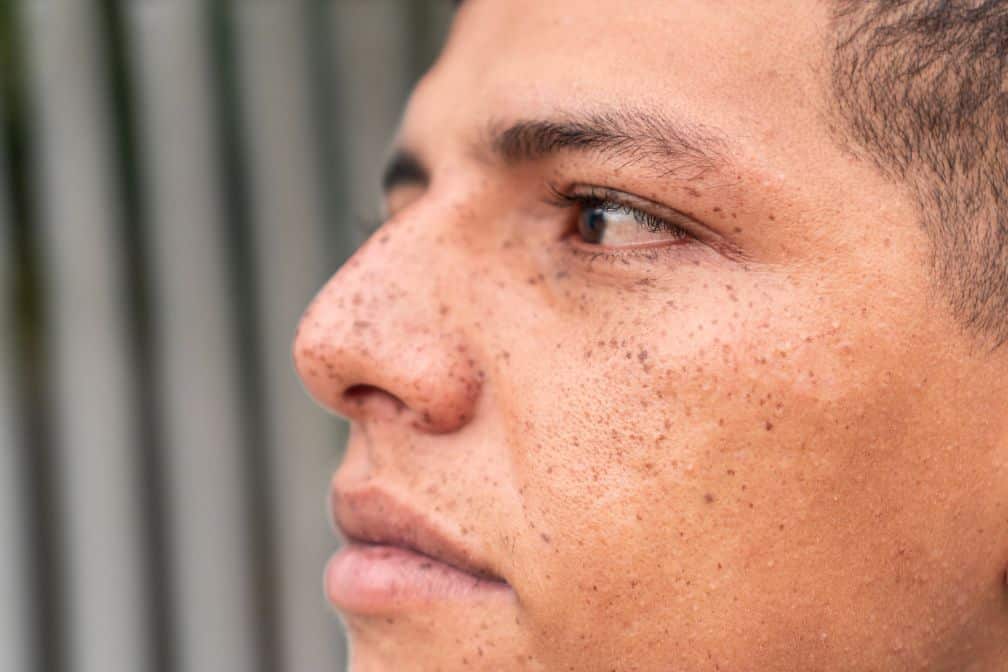
Freckles and solar lentigines are the most common forms of sun induced pigmentation seen in clinical practice, especially in sunny climates like Australia.
- Freckles (Ephelides): These are small, flat, light brown spots that typically appear on sun exposed areas during childhood or adolescence. Freckles are genetically determined and become darker and more numerous with sun exposure in summer, often fading significantly during the winter months. They reside superficially in the epidermis and respond beautifully to gentle, superficial laser treatments such as fractional non ablative lasers or IPL.
- Solar Lentigines (Sun Spots / Age Spots): Unlike freckles, solar lentigines are a direct result of chronic, cumulative sun exposure and are more common in mature skin. They present as larger, well defined, dark brown or black patches that do not fade during winter. Solar lentigines represent a permanent increase in the number of localised pigment producing cells and require targeted treatments, such as Q switched lasers, to break down the concentrated pigment.
For patients presenting with a mixture of freckles and solar lentigines, a combination approach using IPL for the scattered freckles and targeted Q switched laser for the more stubborn, isolated sun spots often produces the most comprehensive result.
Hormonal Melasma: The Complex Challenge
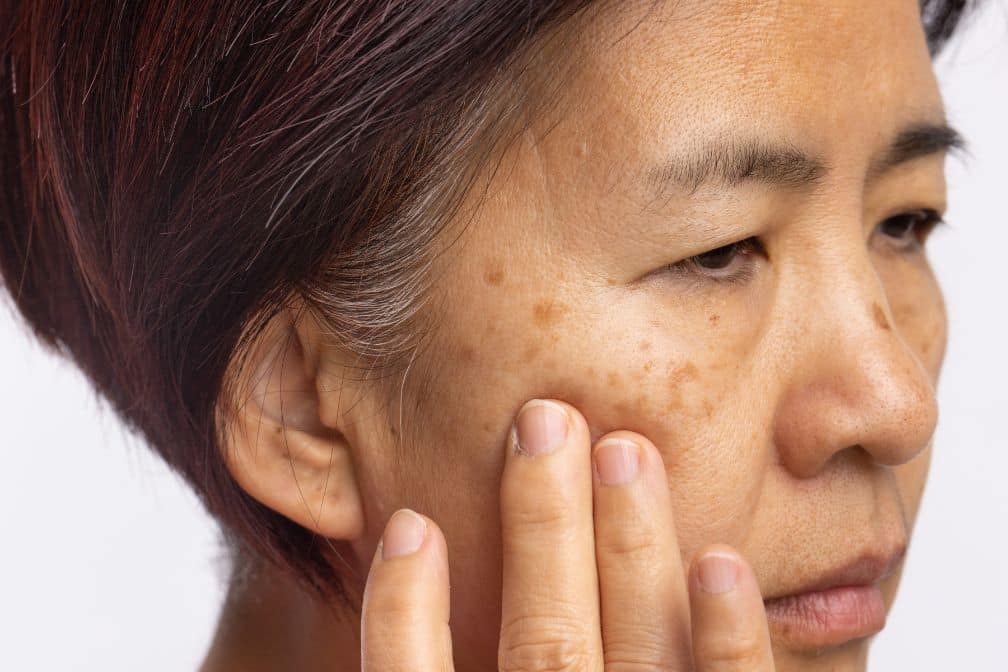
Melasma is a distinct and highly complex pigmentary condition that is significantly more challenging to manage than standard sun spots. It typically presents as large, symmetrical, brown or greyish patches on the cheeks, forehead, upper lip, and chin.
While sun exposure is a major trigger, melasma is primarily driven by internal factors, particularly oestrogen fluctuations. This is why melasma is highly prevalent in women during their reproductive years, during pregnancy, or when taking oral contraceptives or hormone replacement therapy. For those who suspect they are experiencing this complex condition, we recommend reading our dedicated guide on hormonal melasma management.
In melasma, the melanocytes are hyper excitable. They are in a state of constant overactivity and will produce excessive pigment in response to minimal triggers, including:
- Ultraviolet Light: Both UVA and UVB radiation stimulate melasma.
- Visible Light: Even the light from indoor LED bulbs or computer screens can trigger pigment production in sensitive individuals.
- Heat and Friction: Any source of heat (such as hot showers, saunas, or laser heat) or physical friction (such as aggressive face scrubbing) can inflame the skin and worsen melasma.
- Irritating Products: Skincare products that cause stinging, burning, or redness can stimulate the melanocytes to produce more pigment, making the melasma darker.
For patients seeking to reverse the effects of chronic sun damage, including both vascular redness and brown spots, our comprehensive guide on sun damage and dyschromia outlines our full treatment approach.
Diagnostic Comparison
To ensure the correct treatment approach, a cosmetic physician compares the key characteristics of these pigmentary concerns:
| Characteristic | Freckles (Ephelides) | Solar Lentigines (Sun Spots) | Melasma |
|---|---|---|---|
| Primary Cause | Genetic predisposition and sun exposure | Chronic, cumulative UV damage | Hormonal fluctuations and UV exposure |
| Visual Pattern | Small, scattered, light brown spots | Larger, isolated, well defined brown spots | Symmetrical, smudged, diffuse patches |
| Seasonal Change | Darkens in summer, fades in winter | Remains constant year round | Darkens easily with minimal sun or heat |
| Depth | Superficial epidermis | Epidermis (concentrated) | Variable: epidermal, dermal, or mixed |
| Treatment Approach | Gentle lasers, IPL, and sun protection | Targeted Q switched lasers and IPL | Low energy laser toning and strict home care |
Because melasma affected melanocytes are so hyperactive, aggressive laser treatments used for solar lentigines can cause a severe rebound flare up of melasma. If a patient with melasma is mistakenly treated with high energy settings appropriate for sun spots, the initial improvement will be followed by a devastating darkening of the pigmentation that is far worse than the original condition. This is why an accurate diagnosis by a qualified cosmetic physician is absolutely critical before undertaking any laser treatment. By understanding the unique biology of your pigmentation, you can safely embark on a customised treatment journey to achieve a clearer, more even, and radiant complexion.