
Combining Modalities: Tailoring Pigment and Melasma Treatments for Your Skin Type
When addressing complex cosmetic concerns such as facial pigmentation and melasma, relying on a single treatment modality is rarely the most effective approach. Modern cosmetic medicine has moved away from the concept of a “one size fits all” solution, recognising that different types of skin conditions require distinct, highly customised strategies. By combining multiple modalities, such as specialised lasers, light therapies, and active skincare, a cosmetic physician can target pigmentation at different depths while maintaining the health and integrity of the skin. This tailored approach ensures optimal results with a high safety profile.
The Logic Behind Multi Modality Treatments
The skin is a multi layered organ, and pigmentation can reside in the superficial epidermis, the deeper dermis, or across both layers (mixed pigmentation). A single laser wavelength cannot safely or effectively address pigment at all levels. For example, a wavelength that is highly effective for superficial sun spots may not penetrate deeply enough to reach dermal pigment, while an aggressive setting used to target deep pigment can cause burns on the surface.
By structuring treatments into separate, distinct phases or targeting different modalities in a single session, a cosmetic physician can address multiple concerns simultaneously. This multi dimensional approach allows for:
- Depth Specific Targeting: Using different wavelengths to treat both superficial and deep pigmentation precisely.
- Synergistic Healing: Combining treatments that stimulate collagen with those that clear surface discolouration, leading to an overall healthier skin structure.
- Vascular and Pigment Control: Addressing both the red (blood vessels) and brown (melanin) components of sun damage, which often coexist.
- Reduced Treatment Sessions: By addressing multiple concerns in a single visit, patients require fewer total appointments, saving time and reducing the cumulative stress on the skin.
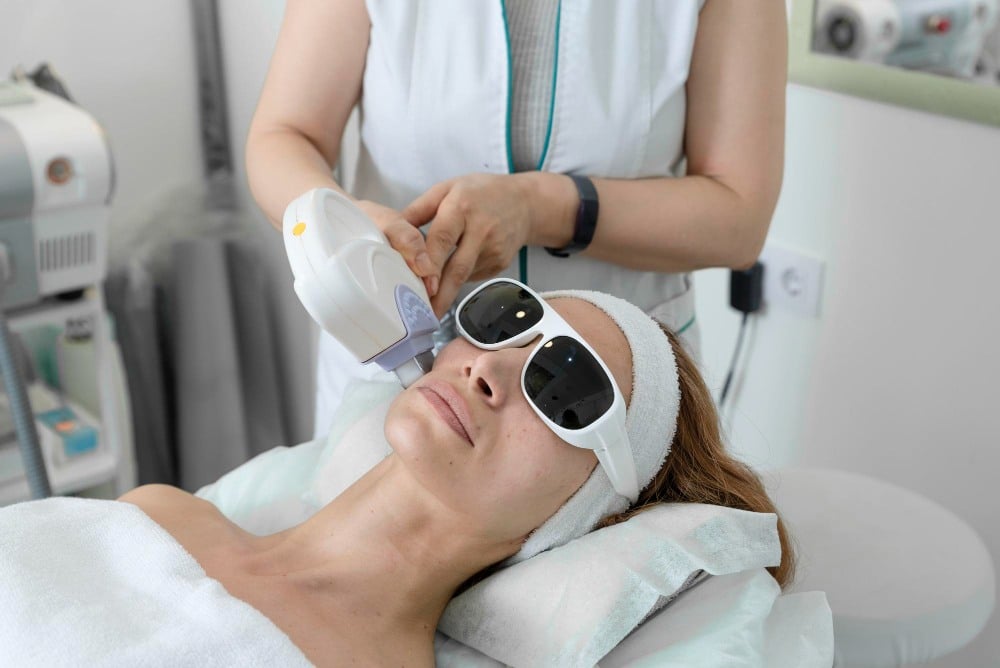
Structuring Modalities for Pigment and Melasma
To prevent information overload and ensure clarity, a customised treatment plan can be structured into distinct modalities, each addressing a specific aspect of the patient’s skin:
| Modality Type | Specific Technology | Clinical Focus | Treatment Role |
|---|---|---|---|
| Light Therapy | Intense Pulsed Light (IPL) | Superficial sun damage, freckles, and visible capillaries | Clears the surface discolouration of red and brown pigment |
| Laser Toning | Low energy 1064 nm Q switched Nd YAG | Deep dermal pigment, laser rejuvenation, and melasma | Gently disperses deep pigment and stimulates dermal collagen |
| Fractional Laser | 1940 nm Non Ablative Fraxel | Epidermal texture, fine lines, and stubborn sun spots | Promotes rapid cell turnover and exfoliates superficial pigment |
| Topical Therapy | Tyrosinase Inhibitors and Active Vitamins | Melanocyte regulation and skin conditioning | Calms pigment producing cells and supports healing |
For a patient presenting with a combination of superficial sun spots and deep hormonal melasma, an experienced cosmetic physician will never use an aggressive, single session laser. Instead, they might recommend a series of low energy Q switched laser toning sessions to gently disperse the melasma, combined with a targeted 1940 nm fractional treatment to address surface texture, supported by a daily medical grade skincare routine to keep the melanocytes stable. For patients who require this careful balance, we recommend reviewing our guide on gentle melasma management.
The Crucial Role of Vascular Treatment in Melasma
An often overlooked aspect of melasma management is the vascular component. Clinical research has demonstrated that hyperactive melanocytes are frequently supported by an underlying network of microscopic blood vessels. These vessels release vascular endothelial growth factor, which stimulates the adjacent melanocytes to produce more pigment.
If a patient exhibits both facial redness and melasma, treating the redness first is highly beneficial. Utilising a dedicated vascular laser or conservative vascular settings on an Nd YAG laser helps to close these micro vessels, effectively cutting off the “fuel supply” to the pigment producing cells. Once the vascular component is controlled, subsequent pigment treatments become significantly more effective, and the risk of rebound hyperpigmentation is greatly reduced.
This sequential approach, vascular first then pigment, is a prime example of how understanding the underlying biology of a condition leads to superior clinical outcomes. To understand the physical differences in how these laser pulses interact with the skin, see our analysis of the Q switched Nd YAG laser.
Customizing by Fitzpatrick Skin Type
A patient’s ethnic background and skin colour (Fitzpatrick skin type) heavily influence how their skin responds to laser energy. The Fitzpatrick classification system helps the cosmetic physician determine the appropriate treatment intensity and predict the risk of complications:
- Fitzpatrick Types I to III (Lighter Skin): These skin types have a lower risk of post inflammatory hyperpigmentation, allowing for a wider range of laser settings and modalities, including superficial 532 nm Q switched treatments for freckles.
- Fitzpatrick Types IV to VI (Darker Skin): These skin types have highly active melanocytes that react strongly to heat. For these patients, a cosmetic physician will avoid high energy treatments and instead rely on ultra gentle, low energy 1064 nm laser toning and non thermal topical therapies to safely manage pigmentation without inducing dark scars.
By moving away from a “one size fits all” approach and embracing a structured, multi modality strategy, patients can safely and effectively achieve a clearer, brighter, and more radiant complexion tailored specifically to their unique skin needs.